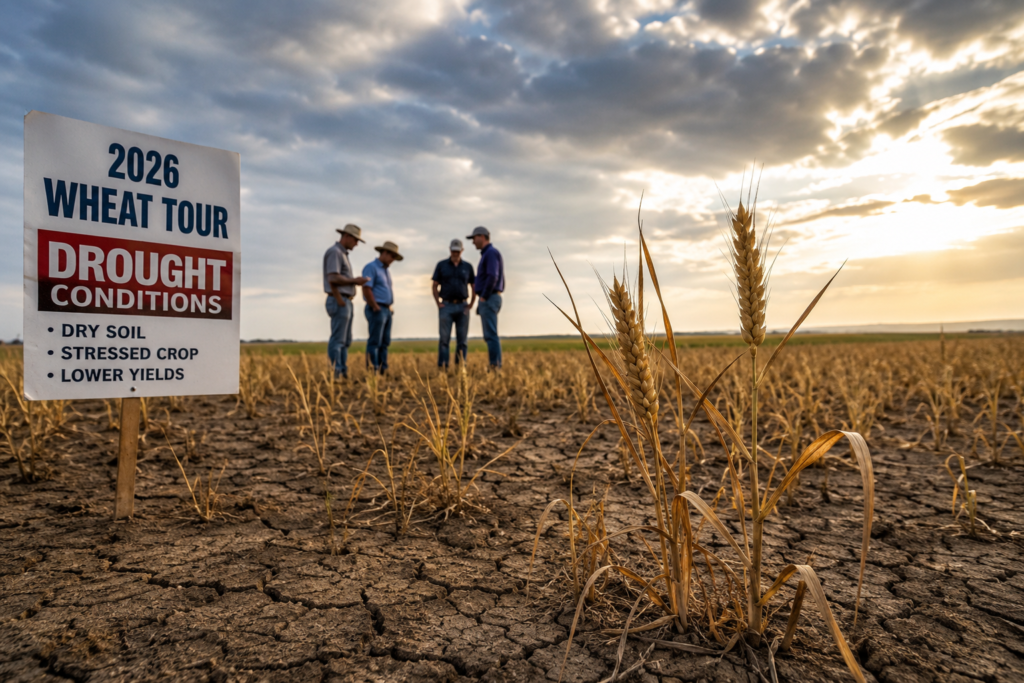
The 2026 Wheat Tour has brought serious concern to America’s wheat industry as drought conditions continue to affect large farming regions across the Great Plains. Crop scouts, farmers, and agricultural experts traveling through wheat-producing states are reporting thinner stands, shorter plants, and lower yield expectations compared to previous years.
From western Kansas to parts of Oklahoma, Colorado, and Nebraska, dry weather has become the biggest challenge for wheat growers this season.
Dry Weather Hurting Wheat Development
The lack of timely rainfall during the winter and spring months has slowed wheat growth in many areas. Farmers participating in the 2026 Wheat Tour explained that soil moisture levels remain critically low, especially in non-irrigated fields.
Many wheat fields are showing:
- Poor tillering
- Uneven crop growth
- Smaller wheat heads
- Reduced grain potential
- Increased stress from heat and wind
Agronomists say that even fields that looked healthy earlier in the season have started showing signs of drought stress as temperatures rise.
Wheat Yield Expectations Decline
Early estimates from crop scouts suggest that average wheat yields may fall below normal in several drought-affected counties. Some producers are already considering cutting fields for hay instead of harvesting grain due to poor crop conditions.
In some regions, wheat plants are shorter than usual, making it difficult for farmers to expect strong harvest numbers. Experts on the Wheat Tour noted that moisture received during the next few weeks will be critical for final grain filling.
Farmers Facing Rising Costs and Uncertainty
The drought comes at a difficult time for growers who are already dealing with:
- Higher fertilizer prices
- Increased fuel costs
- Expensive irrigation expenses
- Market volatility
Many farmers say profit margins are becoming tighter, especially for dryland wheat operations. Some producers are also worried about long-term groundwater availability if dry weather continues into summer.
Technology and Crop Management Becoming Essential
Despite difficult conditions, farmers are using modern technology and better crop management practices to reduce losses. Across the Wheat Tour, growers highlighted the importance of:
- Drought-tolerant wheat varieties
- Soil moisture conservation
- Precision irrigation systems
- Weather monitoring tools
- Minimum tillage practices
Agricultural experts believe these strategies will play a major role in helping farms adapt to increasingly unpredictable weather patterns.
Market Impact of the 2026 Wheat Tour
The Wheat Tour findings are closely watched by grain traders and global food markets. Lower production estimates from major wheat-producing states could influence wheat prices in both domestic and international markets.
If drought conditions continue, analysts expect stronger price volatility during the 2026 harvest season.
Looking Ahead
While the 2026 Wheat Tour has highlighted major drought concerns, farmers remain hopeful that late-season rainfall could still improve crop conditions in some areas. The coming weeks will be crucial for determining final wheat production across the Plains.
For now, the Wheat Tour serves as an important reminder of how weather continues to shape the future of agriculture in the United States.